







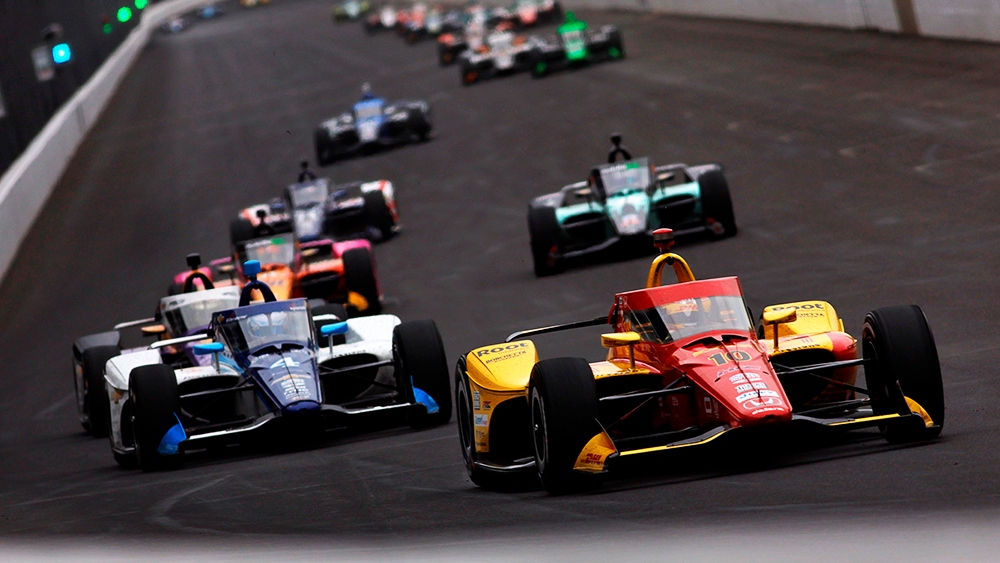
Inside INDYCAR Racing: What Makes the NTT INDYCAR SERIES Race Car Unique?
INDYCAR race cars are purpose-built machines designed to push the limits of speed, safety and performance. While the technology is advanced, the series places a strong emphasis on driver ability, team execution and strategic decision-making.
Here’s what defines the cars used in the NTT INDYCAR SERIES:
Purpose-Built, Open-Wheel Design
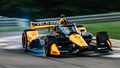
INDYCAR racing consists of open-wheel race cars – meaning the wheels are exposed and sit outside the main body of the car. They are engineered specifically for racing, with low ground clearance, streamlined aerodynamics and a central cockpit designed for single-driver use. Every element of the car is constructed to enhance agility, speed and driver responsiveness on a variety of track types.
Standardized Chassis: The Dallara IR-18
The backbone of every NTT INDYCAR SERIES car is the Dallara IR-18 chassis, a purpose-built, spec design introduced in 2018 to ensure close competition and emphasize driver skill. Unlike some other open-wheel series where teams develop their own chassis within technical regulations, INDYCAR uses a single standardized chassis for all competitors. This levels the playing field and puts greater focus on race strategy, driver ability and team setup rather than engineering development.
The IR-18 features an open-wheel design optimized for high downforce, aerodynamic efficiency and nimble handling. It incorporates advanced safety features such as a reinforced cockpit, energy-absorbing crash structures and the aeroscreen – a polycarbonate shield that protects drivers from debris while maintaining clear visibility.
Its aerodynamic package can be adjusted with different aero kits tailored for road courses, ovals and superspeedways, allowing teams to fine-tune performance to each track’s demands. Using a spec chassis helps promote close racing, control costs and highlight driver talent, making INDYCAR’s racing distinctly competitive and accessible.
Hybrid V6 Twin-Turbocharged Engines
Powering each NTT INDYCAR SERIES car is a 2.2-liter twin-turbocharged V6 engine supplied by either Honda or Chevrolet. These engines deliver more than 700 horsepower and are built for both high performance and durability, enabling drivers to push at top speed across a variety of demanding track types.
A defining feature of these power units is the integration of hybrid technology. The engines include an energy recovery system that captures and redeploys energy during the race, enhancing acceleration and efficiency without compromising the sport’s characteristic sound and power. This hybrid system represents INDYCAR’s commitment to embracing modern, sustainable technology while maintaining the thrilling experience fans expect.
Unlike many other racing series, INDYCAR cars do not use power steering. Drivers must rely entirely on their own strength and precision to control the car, especially during high-speed turns and long race stints. This makes steering physically demanding and highlights the importance of driver fitness and skill in the series.
The twin-turbochargers help maximize power delivery across the rev range, providing quick throttle response and strong torque whether accelerating out of tight corners or reaching top speeds on long straights.
Teams work closely with their engine manufacturers to fine-tune performance based on the specific demands of each race, balancing power output, fuel efficiency and reliability. This technical partnership is critical to success, making the engine a key factor in race strategy and competition.
Track-Specific Aero Configurations
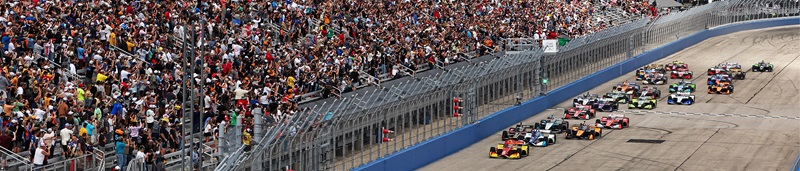
One of the unique challenges of the NTT INDYCAR SERIES is its diverse schedule, which includes a mix of superspeedways, short ovals, road courses and street circuits. To compete effectively across these varied venues, each car’s aerodynamic setup is carefully tailored to the specific demands of the track.
INDYCAR employs three primary aero configurations to optimize performance:
Road and Street Courses: These tracks require a high level of downforce to maximize grip through tight corners and technical sections. Cars run aerodynamic packages focused on stability and cornering ability, which includes larger front and rear wings and additional bodywork to generate maximum downforce without sacrificing too much straight-line speed. This setup helps drivers maintain control and precision on twisty, bumpy street circuits and complex road courses.
Short Ovals: On these shorter, typically flatter oval tracks, cars need a balanced aerodynamic setup that offers enough downforce for cornering but also keeps drag low to maintain speed on the straights. The aero packages for short ovals are optimized to provide stability in traffic and help drivers handle quick transitions while minimizing turbulence from other cars.
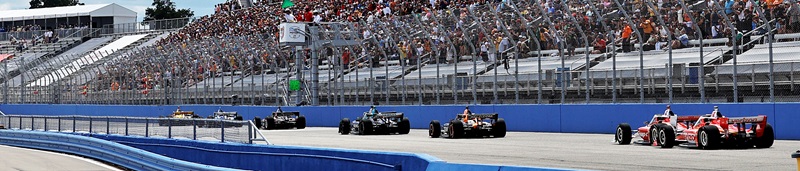
Superspeedways: These large, high-speed oval tracks demand aerodynamic packages designed to reduce drag and increase top speed. Cars run low-downforce setups with smaller wings and smoother bodywork to slice through the air efficiently. The goal is to maximize speed while still retaining enough control to handle the long, sweeping corners at speeds often exceeding 230 mph.
Each aero package can be further fine-tuned by teams through adjustable elements such as wing angles and suspension settings, allowing drivers to adapt to changing conditions during practice, qualifying and the race. This flexibility helps maintain close competition and ensures that each track challenges drivers and teams in different ways.
Push-to-Pass System
The push-to-pass system is a key strategic element used in the NTT INDYCAR SERIES on road and street course events. Designed to add excitement and tactical depth to races, it provides drivers with a temporary boost in engine power that can be used to gain position or defend against challengers.
When activated, push-to-pass increases horsepower by opening additional engine parameters for a limited time, delivering extra acceleration and higher top speeds. Drivers receive a fixed allotment of push-to-pass time per race, which they can deploy in short bursts whenever the opportunity arises.
Using push-to-pass effectively requires precise timing and race awareness. Drivers might activate it to make a critical pass on a competitor, defend their position when under pressure, or break away from a pack during key moments. Because the resource is limited, managing how and when to use push-to-pass becomes a vital part of race strategy for both drivers and teams.
This feature not only enhances the on-track action by creating more passing opportunities, but it also rewards skillful decision-making under pressure. By balancing aggression with conservation, drivers can maximize their performance over the course of a race.
The IR-28: The Next INDYCAR Chassis
In July 2026, INDYCAR unveiled the IR-28, the all-new NTT INDYCAR SERIES chassis and powertrain package set to debut for the 2028 season. Developed in collaboration with longtime chassis partner Dallara, the new car is designed to deliver faster lap times, improved raceability and even closer wheel-to-wheel competition while continuing INDYCAR’s commitment to safety and innovation.
The IR-28 represents a complete evolution of the current platform, featuring a newly designed chassis, updated aerodynamic package and next-generation hybrid powertrain. Built around three key pillars – competition, performance and safety – the car is engineered to enhance overtaking opportunities, improve drivability and create a modern look that maintains the unmistakable identity of an INDYCAR SERIES car.
The new chassis will be approximately 100 pounds lighter than the current car, improving the power-to-weight ratio and allowing drivers to push harder while enhancing on-track competition. New front and rear wing designs, combined with an aerodynamic architecture developed to better manage airflow from the front of the car to the rear, will allow cars to follow more closely through corners and across the field. The IR-28 will also feature a lighter, more aerodynamic aeroscreen integrated into the overall design, creating a sleeker profile while continuing to advance driver protection.
Additional performance upgrades include electronically controlled driver-adjustable anti-roll bars and the introduction of the Custom AXIS Inertance Control Suspension System. The lightweight, shared damping architecture provides teams with expanded setup options while improving mechanical grip and raceability without increasing costs. The platform further establishes INDYCAR as a leader in suspension technology by continuing to allow both front and rear third-element inertance systems.
The IR-28 will be powered by Chevrolet and Honda 2.4-liter twin-turbocharged V6 engines capable of producing up to 760 horsepower. The new engine formula will deliver increased torque, power and overall performance while continuing to integrate INDYCAR’s low-voltage hybrid technology. The hybrid system will evolve with greater energy storage capacity, more deployment flexibility and a lighter overall package through new partnerships with Helix and BOLD Technology. The battery-based Energy Storage System will provide approximately 14 times the energy storage capacity of the current hybrid system while helping reduce the overall power unit weight by approximately 20 pounds.
Xtrac, INDYCAR’s exclusive transmission supplier since 2000, is developing a new gearbox for the IR-28 platform that reduces weight by 25 pounds compared to the current unit. The transmission will support the performance goals of the new chassis while continuing Xtrac’s long-standing role in INDYCAR competition.
Safety remains at the center of the IR-28’s development. The new chassis incorporates a lighter integrated aeroscreen, improved cockpit dimensions to accommodate a wider range of driver sizes, enhanced driver cooling and stronger side-impact structures designed to improve energy absorption during impacts. The car’s crash dynamics have also been optimized to improve stability during nose-up, sliding and spinning incidents, with development targeting INDYCAR and FIA safety standards – whichever is more stringent.
Beyond performance and safety, the IR-28 introduces new fan-focused design elements, including a digital car position display for practice, qualifying and races, a transparent engine cover window highlighting Chevrolet, Honda and manufacturer branding and additional surface areas for team and partner sponsorship opportunities.
Initial testing for the IR-28 will begin in 2026, with development continuing across a variety of circuits before the car’s full implementation across the NTT INDYCAR SERIES grid in 2028. The project represents the next chapter in INDYCAR’s continued growth, bringing together advancements in technology, competition and safety to create a new era for “The Fastest Racing on Earth.”