





No Smiths in ‘500,’ But This Smith’s Role Etched in Race’s Rich History

Eric Smith
INDYCAR Staff Writer
18 MINUTES AGO
There have been 808 drivers who have made at least one start in the Indianapolis 500. Not one has had the surname Smith.
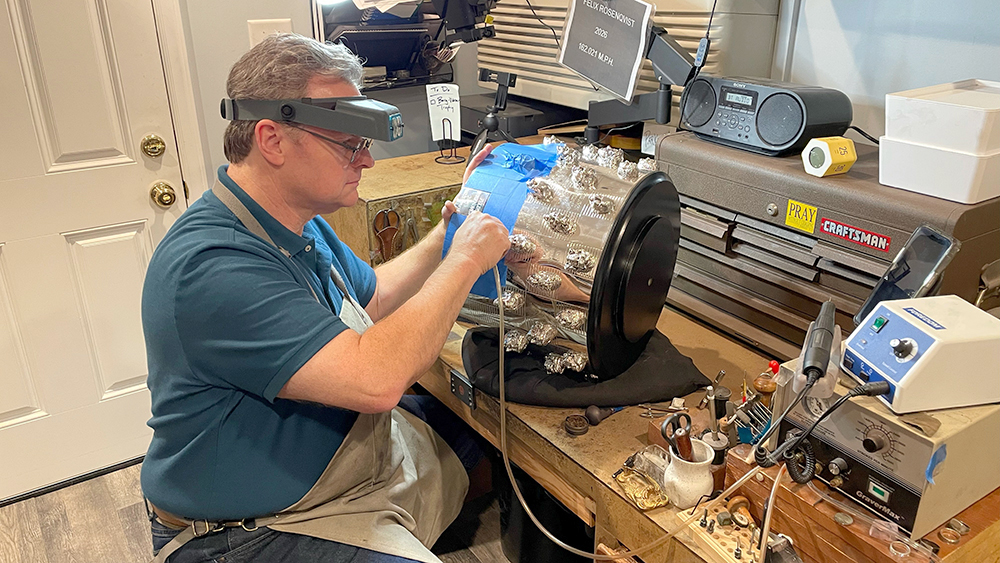
Meet Reid Smith, a Charlotte, North Carolina-based engraver whose work has become a permanent part of Indy 500 history. While Smith has never competed in the race, his hands have helped preserve its legacy, one engraving at a time.
Since 2021, Smith has been responsible for engraving the name, winning year and race-winning average speed of Indianapolis 500 winners on the base of the iconic Borg-Warner Trophy, the hardware every driver dreams of seeing adorned with their likeness.
“Just kind of ironic that your most common surname, certainly in America and parts of Europe, has never appeared among the race’s winners,” Smith said.
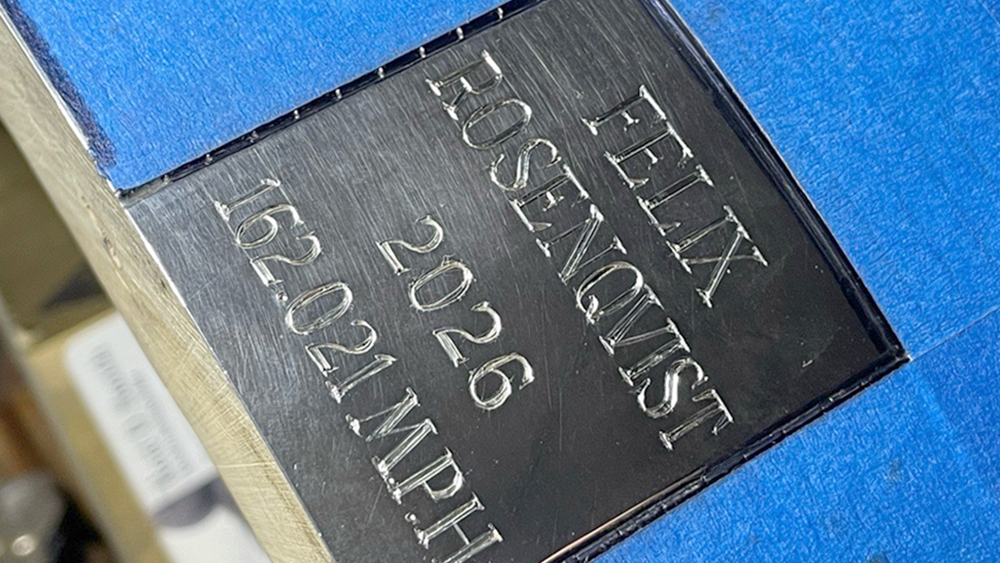
On Nov. 16, Smith added more words to the trophy, engraving Felix Rosenqvist’s name, winning year and race-winning average speed (photo, above) following one of the most dramatic finishes in the event’s history. Rosenqvist earned his place on the trophy by winning the 110th Running of the Indianapolis 500 presented by Gainbridge on May 24. He made a daring move on the final lap in the No. 60 Meyer Shank Racing w/Curb Agajanian Honda, using the high line against the wall exiting Turn 4 to power past David Malukas just yards before the Yard of Bricks start-finish line. Rosenqvist won by .0233 of a second, the closest finish in Indianapolis 500 history.
This latest assignment for Smith offered another opportunity to make a small but permanent contribution to the race’s history. It also brought an amusing connection to his own last name, which has roots in the very type of craftsmanship that defines his work.
“If you think about it, the surname Smith came from craftsman, like a blacksmith,” he said. “Rosenqvist’s do really cool things fast, and Smiths do very cool things slowly, and in metal.”
Blacksmiths worked with iron. Silversmiths worked with silver. And Smith, fittingly, works with the metal that helps tell the Indianapolis 500 story. He said the engraving itself is a tradition that requires a steady hand, an artistic eye and plenty of patience, leaving his approach anything but conventional.
Smith moves around the trophy rather than working methodically from top to bottom or left to right, sometimes starting with the bottom line before working his way through the rest of the design.
“Engraving is not like handwriting,” Smith said. “You’re not writing. It’s a design. It’s simply lines and curves. That’s all it is.”
Smith begins the process by designing the entire layout, marking the surface with wax and pencil. Starting at the top could mean accidentally rubbing away the design below as his hand moves across the trophy.
“The first thing that comes to mind is most of my projects are very small, and the Borg-Warner Trophy is very large, and it cannot be disassembled other than taking the bottom off of it,” Smith said. “That's actually the hardest part of the job, maneuvering the trophy while I'm working on it.”
Smith took over the responsibility in 2021, with Helio Castroneves' fourth "500" victory as his first engraving on the Borg-Warner Trophy.
On Nov. 17, the latest chapter in the trophy's annual transformation continued as the sterling silver face bearing Rosenqvist’s likeness was attached to the base by sculptor William Behrends. That process began months earlier.
On Sept. 22, Rosenqvist traveled to Tryon, North Carolina, where Behrends unveiled the sculpted clay likeness that will serve as the bas-relief portrait on the Borg-Warner Trophy. The iconic trophy features the likeness of every Indianapolis 500 winner, creating a visual history of the race dating to its inaugural running in 1911.
While Behrends captures the driver's likeness, Smith ensures the details of the victory are recorded for generations to come. Both crafts require precision, patience and an appreciation for the significance of the finished product.
“It continues to be amazing to me,” Smith said. “I enjoy being a part of it. All the people that I've worked with are so pleasant to deal with, and just knowing and learning more about the history, and just knowing that I'm a part of it is amazing. I remember it came to me afterward that: ‘Wow, that's going to be there forever, and no one can say I didn't do it. Or they can, but they'd be wrong.’
“Even though I was not a sports fan before working on this, I have continued to enjoy the excitement, not just because I'm a part of it, but I've found an enjoyment in the sport.”