






APP EXCLUSIVE: Mears recalls impact Bill Simpson had on his career
Bruce Martin
DEC 17, 2019
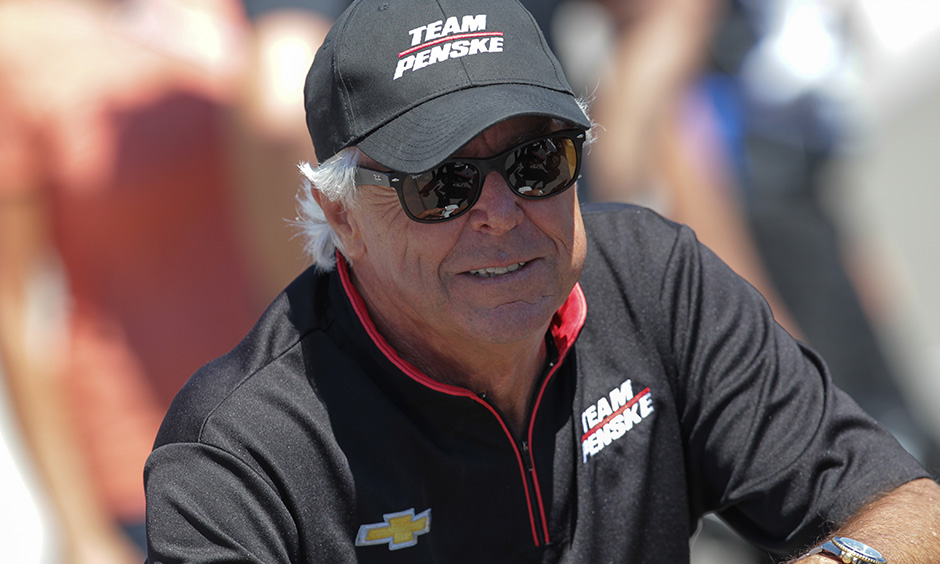
Bill Simpson had a major impact on Rick Mears’ incredible career, from providing the four-time Indianapolis 500 winning driver with safety equipment to giving Mears his first-ever Indy car ride.
That came in a pink car in the 1976 California 500 at Ontario Motor Speedway in Ontario, California.
Simpson, a former race driver who made one start in the 1974 Indianapolis 500, went on to become one of the leading innovators and manufacturers of racing safety equipment. Simpson suffered a massive stroke Friday and died Monday.
From Parnelli Jones to Bill Simpson to Rick Mears, each were vitally important to each other’s career.
“I had met Parnelli through off-road racing and sprint buggies, and Parnelli used to come down to Ascot Park and watch us run,” Mears told NTT INDYCAR Mobile. “Parnelli was one of our first tire sponsors. We would get the cars loaded up in Bakersfield, California and head to Los Angeles to run the race and on the way, we would swing by Parnelli Jones’ Firestone shop to get a new set of tires mounted to run that weekend.
“They were helping us with tires and when I got into desert racing, we started running places Parnelli did. My first major win was over Parnelli because he was one of my first heroes, second to my Dad.”
Mears and Jones raced against each other, and later for each other. And that is how Mears got to know Simpson.
“Early on in the off-road racing, Steve Richards was Bill Simpson’s off-road representative, so I dealt with him a lot,” Mears said. “Steve Richard is the guy that introduced me to Bill Simpson at the SEMA Show (in Las Vegas). Steve had been putting a bug in Simpson’s ear about me from what I had done in the desert. Parnelli might have done the same with Simpson.
“Richards introduced me to Simpson. We were walking up behind Simpson and he looked at me and said, ‘I know, don’t tell me. It’s another one of those darn off-road racers.’ I thought, ‘Well, who is this guy?’
“But that was Bill Simpson.”
The next time Mears saw Simpson was at Simpson’s business in Los Angeles when he was waiting to talk to one of Simpson’s sale reps. Later, Simpson was testing a Super Vee and he heard, “Hey, Mears, what are you doing?”
Mears was surprised, especially when Simpson acted like they had known each other for 20 years.
“After that, I got a call and he asked me, ‘What are you doing next Wednesday?’” Mears said. “I told him I was running the backhoe for my father at work. He wanted to know if I could test his Formula 5000 car. I got off work and that is how it all started.
“We just hit it off; we really did. Bill was a great guy. We used to laugh about it and Bill knew it, ‘Don’t go by first impressions.’ That was Bill. He either liked you or he didn’t like you and you knew where you stood. We just hit it off and got along great forever.”
As a driver, Simpson started 20th and finished 13th in his only Indianapolis 500 as a driver in 1974. Simpson owned the race car that Mears drove in his first-ever Indy car at Ontario Motor Speedway in 1976. Mears started 20th and finished eighth.
Simpson sold that car to Art Sugai on the guarantee that Mears would remain the driver. Mears finished ninth in his two races with Sugai in 1976 at College Station, Texas and Phoenix. It was a pink car.
“It was actually a car that was formerly owned by Roger Penske,” Mears said. “He had purchased a few ex-Penskes McLarens that Mario Andretti had run after the Eagle chassis. It was the blue and yellow Simoniz car.
“I was asked, ‘What do I think of driving a pink car?’ I said, ‘I don’t care, just as long as I don’t have to wear a pink firesuit.”
Simpson’s lasting legacy in auto racing is as important as winning the Indianapolis 500 four times. That’s because Simpson’s safety equipment saved numerous lives.
“He was a racer,” Mears said. “He never got to the point as a racer where he had the latest, greatest equipment, but he was a good racer in his own right. I got to run against him at Ontario when he was in the McLaren and I was running the Eagle.
“His legacy in the safety industry will be around forever. He was always a leader in that industry and able to come up with new things, new ideas, new concepts of stuff that were very important.
“Bill was a character, but he was also a straight shooter. He either liked your or he didn’t. It depended on what side you were on.”