







Set-up track walk: More than an afternoon stroll

Dave Lewandowski
APR 19, 2013
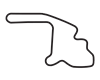
LONG BEACH, Calif. -- Don Halliday takes copious notes on an outline of the temporary street circuit utilized for the Toyota Grand Prix of Long Beach from highlights provided by A.J. Foyt Racing driver Takuma Sato.
Sato, who will make his fourth start in the long-tenured race, doesn’t need much prompting to provide clues to what a driver needs out of the car and how it reacts during a slow-paced walk of the 1.968-mile, 11-turn circuit on set-up day. It’s a benchmark for the team’s chief engineer for this weekend’s event and to file for future years.
“(The track walk) brings the three parts of the triangle – the track, the engineer and the driver – together,” said Halliday, who’s in his first season working with Sato. “It’s a settling-in process. When he says the important things are such and such, I can go back and think, ‘OK, if such and such are important,’ if there’s anything I need to tickle I will.”
Click it: Circuit map PDF
A year after his last visit, in which he started sixth and finished eighth in a Rahal Letterman Lanigan Racing car, Sato rattles off particulars regarding grip levels, cornering tendencies of the car and best approaches to turns like a PGA Tour player recaps his just-completed round.
Turns 1-3 are second-gear turns, he reports, pointing to the location on the left-side curbing of Turn 1 he wants to hit with the left-front tire. “It’s easy to mess up here; you can’t attack it,” Sato says. “You have to watch for front-loading (because of slight undulations coming off the long, high-speed straight). There’s a lot of understeer (with the concrete to asphalt transition). The first phase of the circuit is delicate.”
In the 90-degree Turn 6, “you’re fighting with traction. It’s a two-stage corner and it’s tough to get the power down,” he says. The sharp right-hand Turn 8 can “make or break your race,” while the right-hand Turn 9 leading into the hairpin Sato notices a foot-wide strip of tar to patch a gap in the pavement. A roller skater cruising past hops over the mark and Sato laughs. “Maybe I could do that with the car.”
Halliday collates the notes and collects his thoughts back at the team’s transporter as Sato moves on to the day’s next appointment.
“(The track walk) is a good chatting time,” says Sato, which it is. “Seriously, we look at the bumps, any changes at the corners so that I can explain to the engineers how the car reacts and feels. That way they can imagine the car movement in addition to what they can see from the data -- and that will always help to improve the setups.
“The surface is quite slippery with relatively low grip and it has the tightest hairpin in the series. You need pretty much everything basically. A fast car, of course, but putting more weight on mechanical grip rather than aero, plus a strong fuel consumption, which was key last year, and a fast driver as always, and the right call on strategy.”
The track walk is a great place to start.


